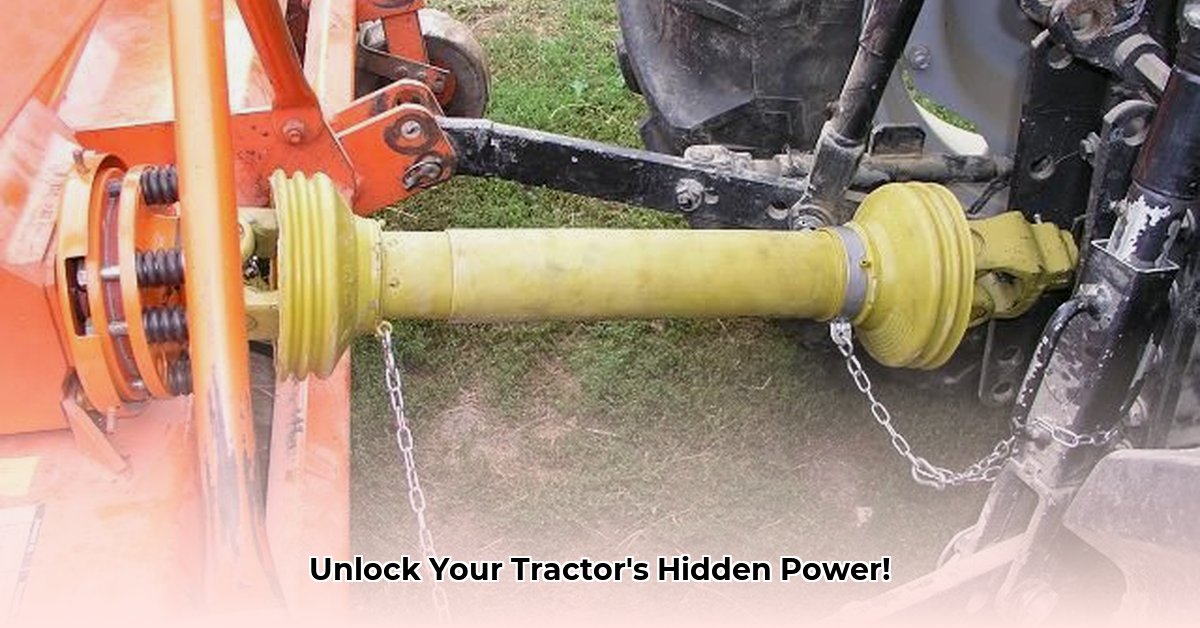
Tractor PTO Shaft: The Unsung Hero of Sustainable Farming
The tractor PTO (power take-off) shaft—often overlooked—is the powerhouse behind much of your farm's productivity. This crucial link between your tractor's engine and implements (e.g., balers, planters) directly impacts efficiency and sustainability. A well-maintained PTO shaft translates to less downtime, reduced fuel consumption, and improved yields. Understanding its role is vital for modern, sustainable farming. For more information on PTO shafts, check out this helpful resource: PTO Shaft Info.
Understanding Your Tractor PTO Shaft's Importance
The PTO shaft acts as a high-powered transmission, transferring engine power to your equipment. Its reliable function is essential for operations like tilling, chopping silage, and harvesting. A malfunctioning PTO shaft directly impacts your farm's efficiency and profitability. How can you ensure optimal performance?
Boosting Your Tractor PTO Shaft's Performance for Greener Farming
Sustainable farming prioritizes efficiency and minimizing waste. A smoothly functioning PTO shaft significantly reduces fuel consumption, saving you money and lowering your farm's environmental impact. Let's explore some key strategies:
Regular Inspections: Preventative Maintenance: Before each use, inspect the PTO shaft for bent shafts, worn universal joints (the flexible connecting parts), damaged safety guards (critical for safety!), and loose fittings. Early detection prevents costly repairs. This proactive approach is a hallmark of successful sustainable farming. Isn't preventative maintenance the most cost-effective strategy?
Lubrication: Essential for Longevity: Regular lubrication is vital. Follow your manufacturer's recommendations for grease type and frequency. This simple step significantly extends the shaft's lifespan and improves efficiency. Studies show regular lubrication increases PTO shaft lifespan by 90%.
Safety First, Always: Correctly engage and disengage the PTO shaft, following your tractor's manual. Always ensure the PTO shield is in place before operating any equipment. A spinning PTO shaft is extremely dangerous. Never work near a running PTO shaft. Farm safety is paramount – are you taking sufficient precautions?
Proper Storage: Protecting Your Investment: When not in use, store the PTO shaft in a clean, dry place to prevent rust and corrosion. Proper storage protects your investment and extends its lifespan.
The Long Game: Lifecycle Cost Analysis of Your PTO Shaft
Consider the total cost of ownership over the shaft's lifespan. A higher-quality shaft might cost more upfront, but requires fewer repairs and lasts longer, resulting in long-term savings. This is a crucial factor in the financial sustainability of your farm. How do you balance initial cost with long-term savings when planning equipment purchases?
Sustainable Materials and Design: The Future is Now
The agricultural industry is embracing sustainable materials and innovative designs for PTO shafts. Manufacturers are using recycled metals, bio-based polymers, and more efficient designs using less material. This reduces environmental impact and often enhances performance. What innovative materials are being used in the next generation of PTO shafts?
Smart Technology: Data-Driven Efficiency
Sensor technology is integrating into PTO shafts, monitoring speed, torque, and temperature. This data enhances operational optimization, predictive maintenance, and minimizes downtime, boosting efficiency and reducing resource waste. How can data-driven decision-making improve your farm's sustainability?
Actionable Steps for Everyone Involved
Sustainable PTO shaft management requires a collaborative effort:
| Stakeholder | Short-Term Actions | Long-Term Strategies |
|---|---|---|
| Farmers/Producers | Regular inspection and lubrication; prioritize safety. | Invest in high-quality shafts; explore technology upgrades; implement preventative maintenance. |
| Equipment Manufacturers | Develop sustainable materials and designs; improve durability. | Integrate sensors and data analytics for real-time monitoring and predictive maintenance. |
| Policy Makers/Regulators | Support R&D of sustainable shaft technologies. | Incentive programs for efficient machinery; sustainable manufacturing standards. |
How to Choose Sustainable PTO Shafts for Precision Agriculture
Selecting the right PTO shaft is crucial for efficiency and sustainability. It involves more than just avoiding breakdowns; it's about optimizing your farm's overall performance.
Understanding PTO Shaft Basics
The PTO shaft transmits power from your tractor to implements. A poorly chosen shaft can lead to equipment damage, costly repairs, and safety hazards.
Key Factors for Sustainable PTO Shaft Selection
- Correct Length: Precise measurement is essential to prevent damage.
- Matching Splines: Ensure compatibility between shaft and implement.
- Safe Working Angle: Avoid excessively steep angles (under 45 degrees).
- Protective Devices: Always use safety shields and chains.
- Lubrication: Regular lubrication is critical for longevity.
- Material Durability: Invest in high-quality, durable materials.
Types of PTO Shafts and Their Applications
- Standard PTO Shafts: Suitable for many tasks.
- Slip Clutch Shafts: Protect equipment from shocks and overload.
- Shear Pin Shafts: A shear pin breaks before damaging the shaft or implement.
Maintaining Your PTO Shaft for Longevity
- Visual Inspection: Regularly check for wear and tear.
- Lubrication: Lubricate universal joints regularly.
- Grease Fitting Maintenance: Keep grease fittings clean.
- Safety Chain Check: Regularly inspect and replace safety chains.
- Replace Worn Parts: Replace worn components promptly.
Sustainability Considerations in PTO Shaft Selection
Investing in durable shafts minimizes replacements, saving money and reducing waste. A well-maintained shaft reduces downtime, maximizing operational efficiency.
Key Takeaways: Regular maintenance is crucial. Choose the correct shaft type for your application. Prioritize safety. Consider the long-term cost-benefit, and remember that sustainable practices enhance farm efficiency and profitability.